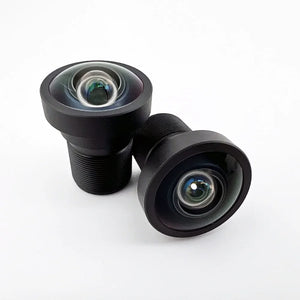
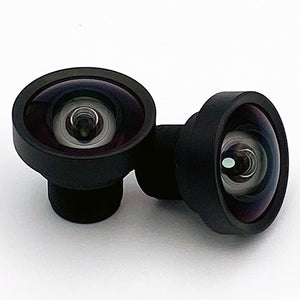
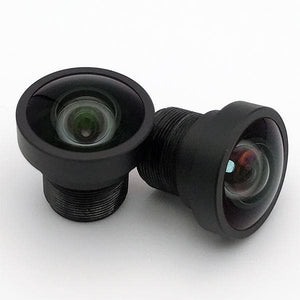
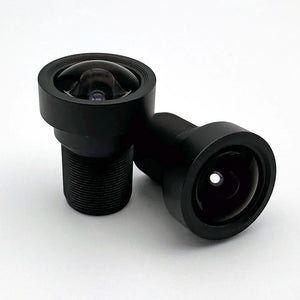
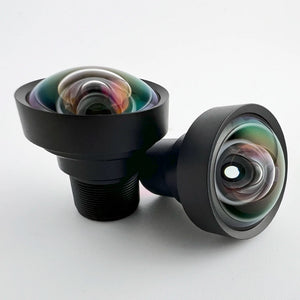
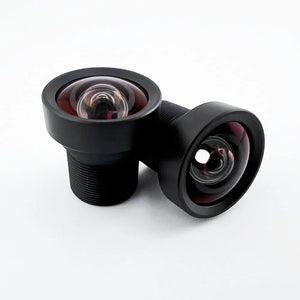
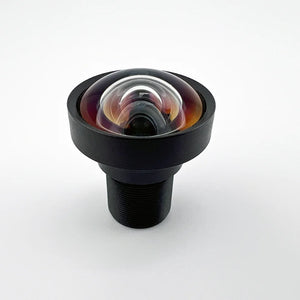
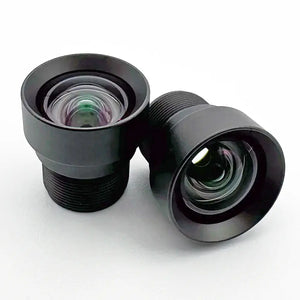
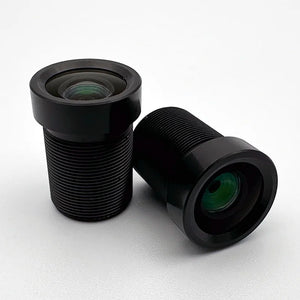
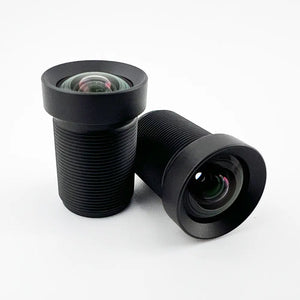
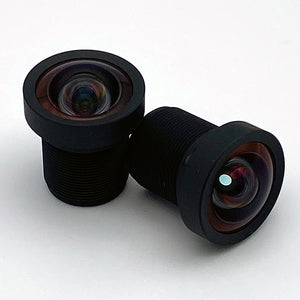
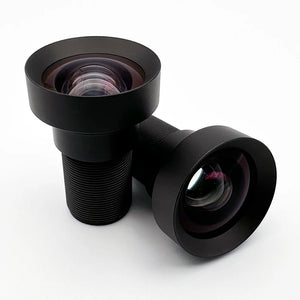
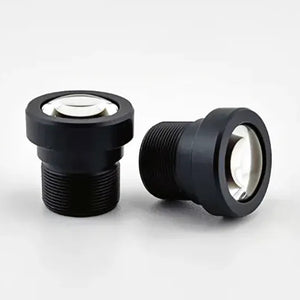
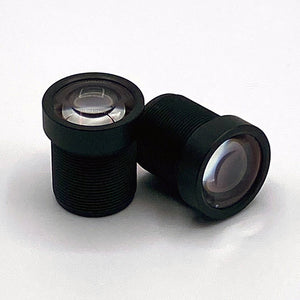
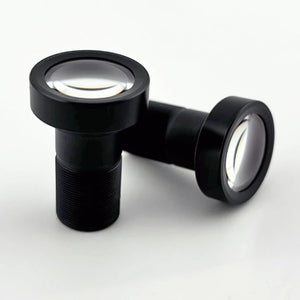
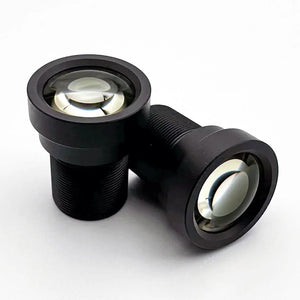
No Distortion and Low Distortion M12 Lenses

Rectilinear S-mount lenses that keep straight lines straight, from 1.8mm wide angle to 35mm telephoto. Datasheets with distortion plots are on each product page.

Inspection systems, mobile robots, and ADAS cameras read geometry straight off the sensor, so the distortion budget gets set before anything else. The notes below cover the field of view tradeoff, what software correction costs, and which designs hold the straightest lines.

24 Rectilinear Lens Designs
1.8–35mm Nominal Focal Lengths
From $19 Sample Pricing
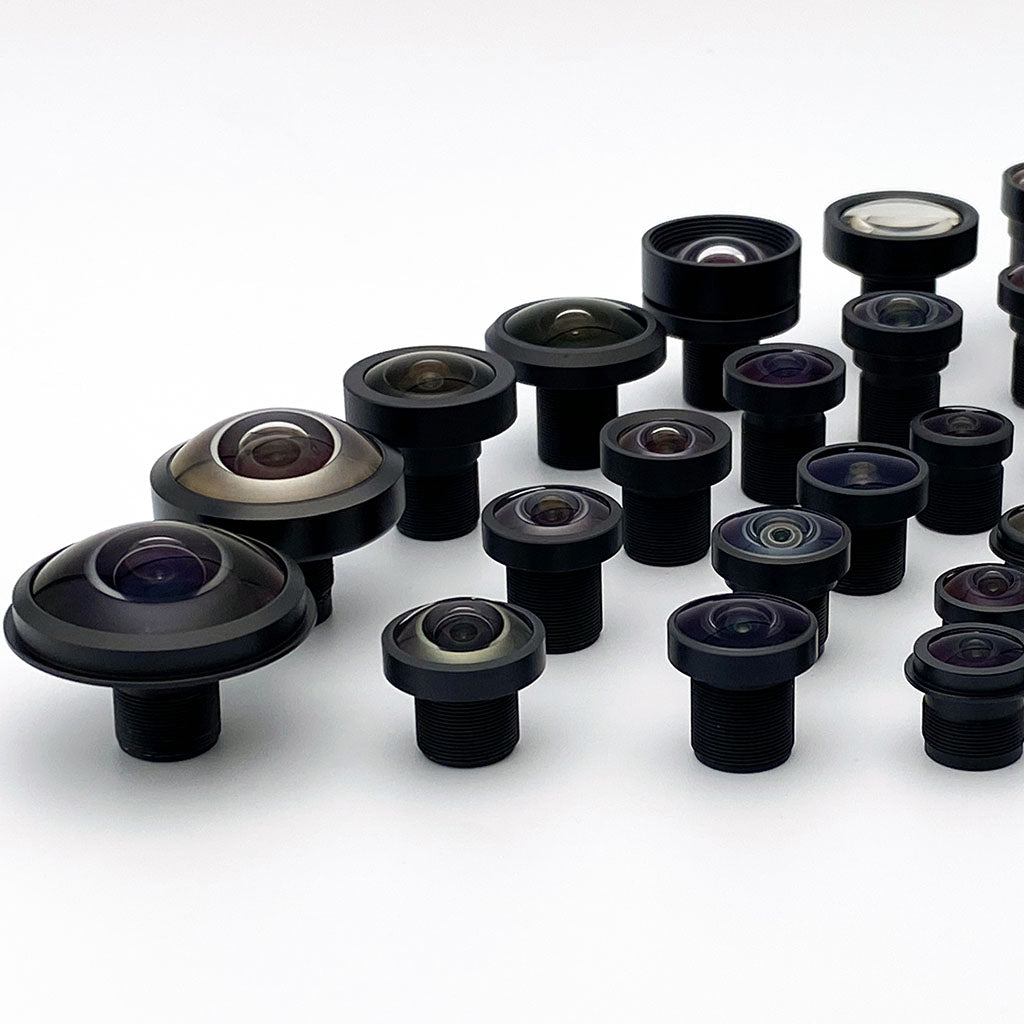
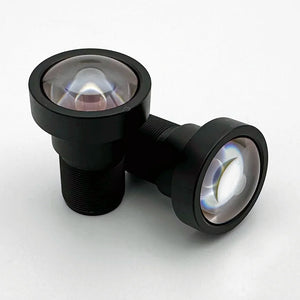
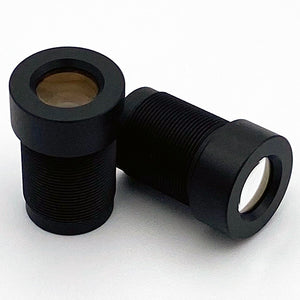
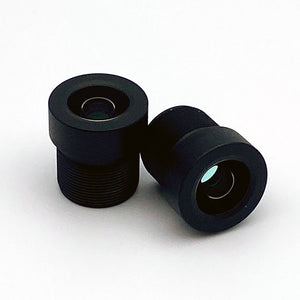
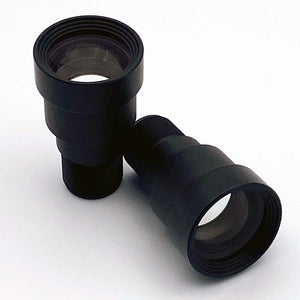
Commonlands no distortion and low distortion M12 lenses for machine vision cameras

All Low Distortion and No Distortion M12 Lenses

24 rectilinear and near-rectilinear S-mount designs from $19. Titles state the nominal focal length; datasheets carry the distortion plot. Sold-out designs are hidden; contact engineering for restock dates.

왜곡 없는 광각 M12 렌즈

Wide-Angle 1.8mm M12 Lens

$39.00

.STP 파일 다운로드상품 보기
광각 저왜곡 2mm S-마운트 렌즈 CIL023

저왜곡 2.2mm M12 렌즈

$39.00

.STP 파일 다운로드상품 보기
RPi HQ 카메라용, 광각이며 왜곡이 없는 2.8mm M12 렌즈.

저왜곡 2.6mm M12 렌즈

$39.00

.STP 파일 다운로드상품 보기
성형 유리 비구면 M12 렌즈, 저왜곡

전면 유리, 저왜곡 2.8mm M12 렌즈

$129.00

.STP 파일 다운로드상품 보기
3mm M12 저왜곡 렌즈

저왜곡 3.0mm M12 렌즈

$49.00

.STP 파일 다운로드상품 보기
바슬러 Dart 카메라 IP67 M12 렌즈

Low Distortion 3.25mm M12 Lens

$39.00

.STP 파일 다운로드상품 보기
Low Distortion 4.2mm M12 Lens

Low Distortion 4.2mm M12 Lens

$49.00

.STP 파일 다운로드상품 보기
Rectilinear 6mm M12 Lens

Rectilinear 6mm M12 Lens

$19.00

.STP 파일 다운로드상품 보기
라즈베리 파이 HQ 카메라 8mm M12 렌즈

저왜곡 8mm M12 렌즈

$19.00

.STP 파일 다운로드상품 보기
4mm 광각 S-마운트 렌즈

저왜곡 3.8mm M12 렌즈

$49.00

.STP 파일 다운로드상품 보기
14MP, 4mm, M12 규격의 광각 렌즈로, 왜곡이 없습니다.

Low Distortion 3.9mm M12 Lens

$39.00

.STP 파일 다운로드상품 보기
왜곡 없는 10MP 4.4mm M12 렌즈

왜곡 없는 4.4mm M12 렌즈

$39.00

.STP 파일 다운로드상품 보기
IMX226 Dart 카메라 3mm M12 렌즈

저왜곡 2.7mm M12 렌즈

$39.00

.STP 파일 다운로드상품 보기
6mm M12 렌즈 S 마운트 렌즈

저왜곡 6mm M12 렌즈

$49.00

.STP 파일 다운로드상품 보기
5mm 렌즈 AR2020 저왜곡

저왜곡 5mm M12 렌즈

$79.00

.STP 파일 다운로드상품 보기
8mm M12 렌즈 CIL078 엔비디아 카메라

저왜곡 7.8mm M12 렌즈

$59.00

.STP 파일 다운로드상품 보기
7mm M12 렌즈 GMSL 카메라

저왜곡 6.8mm M12 렌즈

$49.00

.STP 파일 다운로드상품 보기
12mm M12 망원 렌즈

12mm M12 망원 렌즈

$39.00

.STP 파일 다운로드상품 보기
Blackfly S-마운트 카메라용 6mm M12 렌즈

고속 6mm M12 렌즈

$39.00

.STP 파일 다운로드상품 보기
35mm M12 렌즈

35mm M12 망원 렌즈

$59.00

.STP 파일 다운로드상품 보기
IR 보정 16mm M12 렌즈

IR 보정 16mm M12 렌즈 8MP

$70.00

.STP 파일 다운로드상품 보기
16mm M12 렌즈 CIL160 글로벌 셔터

망원 16mm M12 렌즈

$39.00

.STP 파일 다운로드상품 보기
20mm M12 Lens

Low Distortion 20mm M12 Lens

$49.00

.STP 파일 다운로드상품 보기
25mm M12 S 마운트 렌즈

IR 보정 25mm M12 렌즈

$99.00

.STP 파일 다운로드상품 보기

No Distortion M12 렌즈 및 저왜곡 S-마운트 렌즈 둘러보기

What Counts as a No Distortion M12 Lens?

No distortion means very low residual distortion, not zero; physics does not give you zero. A good rectilinear design holds the residual small enough that straight lines stay straight for measurement and machine vision work.

Rectilinear projection keeps scene geometry intact. Unlike fisheye optics that bow edges outward, a rectilinear lens holds consistent geometry across the frame, so measurement code and detection models get clean spatial input without a dewarp step.

Use these where residual distortion eats the error budget:

  • Metrology systems where microns matter
  • Dimensional inspection and gauging
  • Any pipeline where you’d rather not explain calibration drift to QA
Commonlands low distortion 5mm M12 lens CIL052 with rectilinear projection for measurement cameras
The low distortion 5mm M12 lens (CIL052). Each design in this collection publishes its distortion plot on the product datasheet.

For the distortion mechanics behind these claims, see wide-angle lenses and fisheye camera lens distortion.

When Is a Low Distortion Lens Enough?

Low distortion M12 lenses trade a little geometric perfection for a wider field of view. Straight lines still read straight and calibration stays simple; coverage takes priority over metrology-grade accuracy.

Use these when the camera navigates rather than measures:

  • Mobile robots that need to not hit things
  • SLAM pipelines and autonomous navigation
  • ADAS, driver monitoring, surround view
  • Industrial automation where close-enough geometry works

How to Choose the Right Distortion Profile

Distortion vs. Field of View

Distortion grows with field angle, so wider coverage is harder to keep straight: a 6mm design typically holds cleaner geometry than a 2.8mm on the same sensor. Fighting barrel distortion? First ask whether you need that wide a view. Narrowing the field sidesteps the problem, if you can live with less coverage.

Optical vs. Software Correction

You can dewarp in software, at a cost: interpolation softens edges, correction adds latency, and the remap loses resolution at the frame edge. For real-time systems or pixel-level measurement, start with a lens that does not need much correction.

Line segment detection results degrading under barrel distortion compared with a rectilinear image
Line detection under barrel distortion: the curves are geometry, not noise. From the lens distortion guide.

Sensor Format Matters

A lens designed for a 1/2" image circle will not cover a 1" sensor; expect vignetting, soft corners, and degraded edge geometry. Verify active-area dimensions against CMOS sensor sizes and check chief ray angle compatibility with your sensor.

Then verify coverage and framing with the camera field of view calculator.

Distortion Profile Comparison

Feature 왜곡 없음 낮은 왜곡 피쉬아이
Projection type 직선형 Near-rectilinear Curvilinear
Geometry accuracy 최고 높음 낮음
Measurement suitability Depends on tolerance 아니요
Typical field of view Narrow to moderate Moderate to wide Ultra-wide, 180° and beyond

Need the ultra-wide end instead? Browse M12 fisheye lenses, where the curvature is the projection working as designed.

Applications Where Distortion Control Matters

Machine Vision and Inspection

Distortion directly limits measurement accuracy: uncorrected barrel stretches dimensions toward the frame edge, and on tight-tolerance parts that error turns a pass into a fail. See our guide on image quality and computer vision.

Robotics and Autonomous Systems

Navigation stacks calibrate more simply on near-rectilinear input. A low distortion wide angle lens gives mobile robots scene coverage without pushing the pipeline into fisheye calibration models. Platform picks are in lenses for robotics and lenses for drones.

Industrial Automation

Pick-and-place and alignment systems need a consistent pixel-to-millimeter mapping. Distortion drifts the calibration, and then the arm lands 2mm off target and someone is debugging at 2am.

Frequently Asked Questions About Lens Distortion

What is lens distortion?

Lens distortion is the departure of image height from the lens’s stated projection: magnification changes with field angle, so straight lines render curved even in a sharply focused image. It is a geometric aberration, separate from blur or vignetting, and it grows toward the field edge. Distortion is quoted against a reference mapping and a measurement image circle, which is why the same lens can carry different numbers on different sensors.

What are the main types of lens distortion?

Barrel distortion bows straight lines outward and is common in wide angle lenses. Pincushion distortion pinches lines inward and shows up in telephoto designs. Mustache distortion mixes the two: barrel near center, pincushion at the corners. Sign convention: negative means barrel, positive means pincushion.

What is barrel distortion in a lens?

Barrel distortion is where magnification decreases with distance from the optical axis, so straight lines curve outward like a barrel. For conventional lenses it is a third-order (Seidel) aberration that grows with field angle. It also buys coverage: for a given focal length, more barrel distortion means a wider field of view, which is why wide angle and fisheye designs carry the most.

What is a rectilinear lens?

A rectilinear lens maps ray angle to image height as r = f·tan(θ), which keeps straight lines in the scene straight in the image. Every lens in this collection is rectilinear or near-rectilinear; fisheye lenses intentionally use different projections to reach 180° and beyond. Rectilinear rendering is what measurement, inspection, and lane detection algorithms assume.

Which lenses have the least distortion?

In this collection, the No Distortion 4.4mm (CIL043) carries the tightest label, and the telephoto end measures low naturally: distortion is easier to control at longer focal lengths over narrower fields, so a 6mm or 8mm design typically measures lower than a 2.8mm. Check the distortion plot on the datasheet rather than the product name; the measurement image circle matters.

What are distortion-free lenses?

A marketing term. No lens has exactly zero distortion; a good rectilinear design holds the residual low enough that straight lines look straight and the error disappears inside your measurement budget. Commonlands lists distortion per lens on the datasheet, so you can hold the claim against a number.

Can lens distortion be corrected in software?

Yes, within limits. Calibration models the distortion (Brown-Conrady for near-rectilinear lenses, Kannala-Brandt for fisheye), and dewarping resamples the image against the model. The costs: interpolation softens edges, correction adds latency, and the remap can crop the field. For measurement and latency-sensitive pipelines, starting with clean optics beats fixing geometry every frame.

How do I avoid lens distortion?

Start with the optics. Pick a rectilinear design with low residual distortion, and do not buy more field of view than the application needs, since distortion grows with field angle. Match the lens image circle to your sensor so the corners stay inside the well-corrected field. Then check coverage with the FOV calculator, which accounts for distortion.

Why Engineers Source Low Distortion M12 Lenses From Commonlands

  • We sell to engineers building vision systems, not security camera installers
  • Lenses are MTF tested before shipping
  • ISO 9001:2015 certified, RoHS compliant
  • Buy one for prototyping, then 1,000 for production
  • Email us with your sensor and application and we’ll tell you which lens to use

Not Sure Which Lens Fits Your Sensor?

Tell us your sensor format and field of view requirements, and we’ll point you to the right lens. Samples ship the same day for orders placed before 12 PM PT. No minimum order.