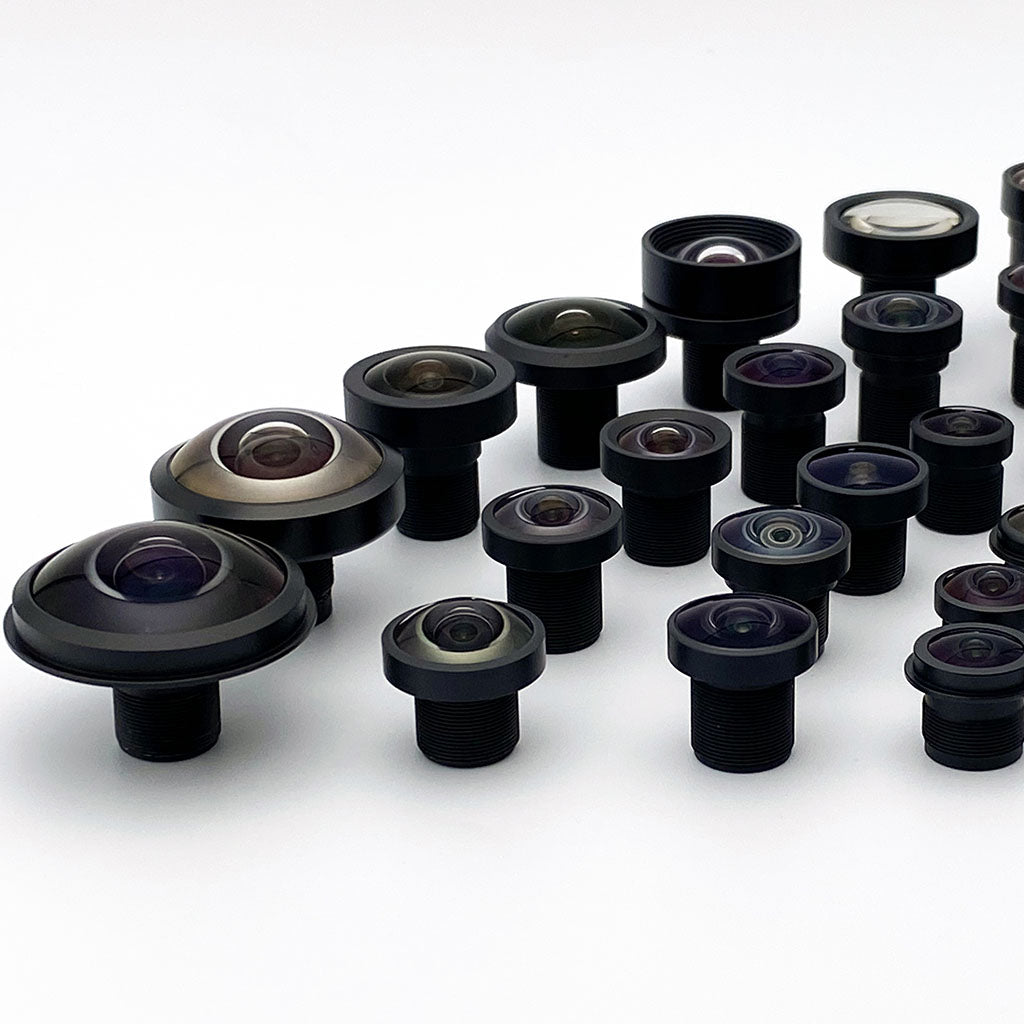

Wide-Angle M12 Lenses
Compare wide-angle S-mount lenses for your camera. Check field of view on your sensor, then choose an M12 barrel and filter option.
Compare Wide-Angle M12 Lenses
Starting prices are shown for available M12 variants. Select an option to order, or open the product for full specifications.
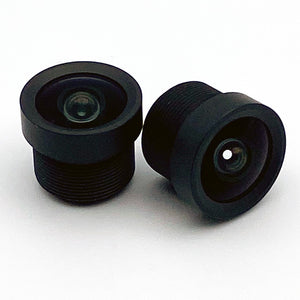
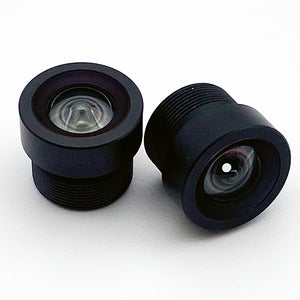
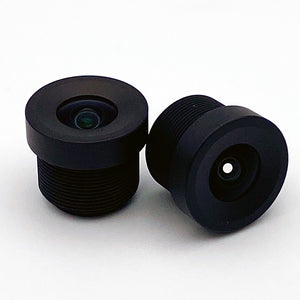
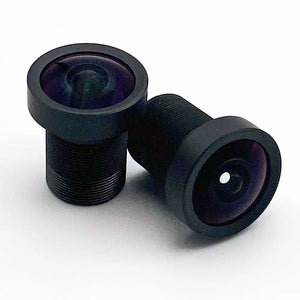
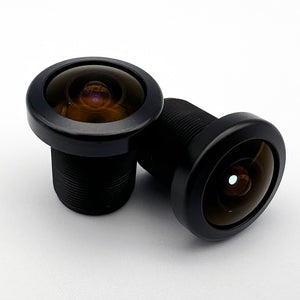
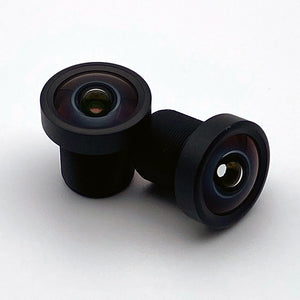
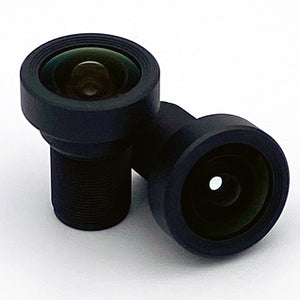
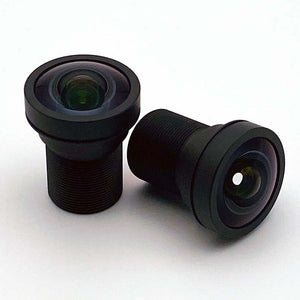
Choose Coverage and Projection Together
For robot navigation or room coverage, begin with the scene your camera must see. A rectilinear design aims to keep straight lines straight. Fisheye designs use a different angular mapping to fit a wider scene onto the sensor; straight lines away from the image center can appear curved.
Software can remap a calibrated image, but the output crop and resampling affect usable coverage and detail. Compare lenses using the projection and distortion data for each design, rather than treating every wide-angle lens as rectilinear.
Check the Edges, Not Just the Center
Inspect modulation transfer function (MTF) and relative illumination across the image field at your working distance. A sharp center does not establish that the corners will resolve your target or receive enough light.
Compare the lens chief ray angle (CRA) curve with the sensor requirements. Confirm cover glass, IR filter thickness, rear clearance, and thread engagement before selecting a barrel. Test the complete lens, holder, and sensor assembly.
Ask for lens and sensor compatibility helpCalculate Field of View on Your Sensor
Enter your sensor in the full M12 lens finder to compare horizontal, vertical, and diagonal coverage. The finder includes the broader M12 catalog; the product cards above are this wide-angle collection.
Open the full M12 lens finder
Wide-Angle Lens Questions
Does the Same Lens Give the Same Field of View on Every Sensor?
No. The sensor’s active width and height determine which part of the image the camera records. Lens projection and distortion determine how scene angles map to that image. Compare horizontal, vertical, and diagonal field of view for your sensor rather than using a single catalog angle without its reference format.
Is Every Wide-Angle M12 Lens a Fisheye?
No. Wide-angle describes coverage; fisheye describes a family of projections. Some wide-angle designs are rectilinear, while others use fisheye mappings. Check the individual lens projection and distortion data before deciding how the image will be used.
Can Software Correction Replace a Low-Distortion Lens?
Calibration and remapping can correct geometric distortion, but they change the output crop and sampling. They cannot recover detail that the lens did not resolve. Evaluate the corrected image at the field edges and at the resolution your application requires.
Which Mechanical and Filter Option Should I Order?
Match the mechanical drawing to your lens holder, sensor position, and rear clearance. Choose the filter for your illumination spectrum and sensor stack. This page offers M12 mechanical versions; the product page lists the complete options. Contact engineering if you need help confirming the combination.
Find a Lens for Your Camera
Send your sensor part number, required field of view, working distance, and mechanical constraints. Our optical engineers can help you choose samples and check the lens-sensor pairing.