
카메라 화각 계산기

실시간 기하학적 시각화를 통해 화각을 계산해 보세요. M12 또는 C-마운트 렌즈에 필요한 초점 거리를 확인하세요. 머신 비전 및 로봇 공학을 위한 무료 엔지니어링 도구입니다.

실시간 FOV 시각화 도구
초점 거리 계산기
H/V/D 각도 출력

물체의 치수를 통한 시야각

주어진 거리에서 알려진 물체를 촬영하는 데 필요한 시야각(FOV) 계산하기

가로 치수 (mm)
수직 치수 (mm)
Distance from entrance pupil to object plane (mm)

실시간 수직 시야각 시각화

카메라 거리: 2000 mm 750 mm --°
수평 시야각
--
도
수직 시야각
--
도
대각선 시야각
--
도

필요 초점 거리 계산기

목표 시야각(FOV)에 맞는 M12 또는 C-마운트 렌즈의 EFL을 찾아보세요.

Desired angle greater than 0° and less than 180°
FOV가 어떤 차원을 가리키는가
센서 데이터시트에 기재된 픽셀 크기 (µm)
센서 너비(픽셀 단위)
픽셀 단위의 센서 높이
너비 × 높이 (자동 계산)
필수 EFL
--
음
센서 치수
--
음
평균 각도 피치
--
°/픽셀

왜곡 없음

The object-size calculator assumes a centered, perpendicular object plane and measures distance from the entrance pupil. It uses scene geometry rather than a lens projection. The sensor-to-focal-length calculator assumes ideal rectilinear projection at a distant focus. For distortion-aware calculations, use our FOV Calculator with Distortion.

카메라 화각을 어떻게 계산하나요?

카메라 시야각(AOV)은 렌즈를 통해 보이는 장면의 각도 범위를 나타냅니다. 이 계산에는 물체의 크기와 관측 거리를 연관 짓는 아크탄젠트 함수가 사용됩니다. 카메라가 포착해야 할 범위를 정의한 다음, 이에 따라 적절한 광학 장치를 선택하십시오.

AOV = 2 × arctan(치수 ÷ (2 × 거리))
HFOV에는 객체의 너비를, VFOV에는 높이를, DFOV에는 대각선 길이를 사용합니다.

위의 시각화 도구는 이 기하학적 구조를 실시간으로 보여줍니다. 입력값을 변경하면 카메라와 물체 모서리 사이의 각도가 업데이트되어, 물체의 크기와 거리에 따라 시야각(FOV)이 어떻게 변하는지 보여줍니다.

센서 사양을 바탕으로 초점 거리를 어떻게 계산하나요?

목표 시야각(FOV)을 파악한 후, 센서의 픽셀 크기를 바탕으로 필요한 렌즈 초점 거리를 계산하십시오. 먼저 픽셀 수와 피치를 바탕으로 센서 크기를 계산한 다음, 시야각 역산 공식을 적용하십시오.

sensor_width = pixels_H × pixel_pitch ÷ 1000
µm를 mm로 변환합니다
EFL = sensor_dim ÷ (2 × tan(AOV ÷ 2))
센서 크기를 시야(FOV) 방향(H, V 또는 D)에 맞추기

나에게 맞는 M12 렌즈 찾기

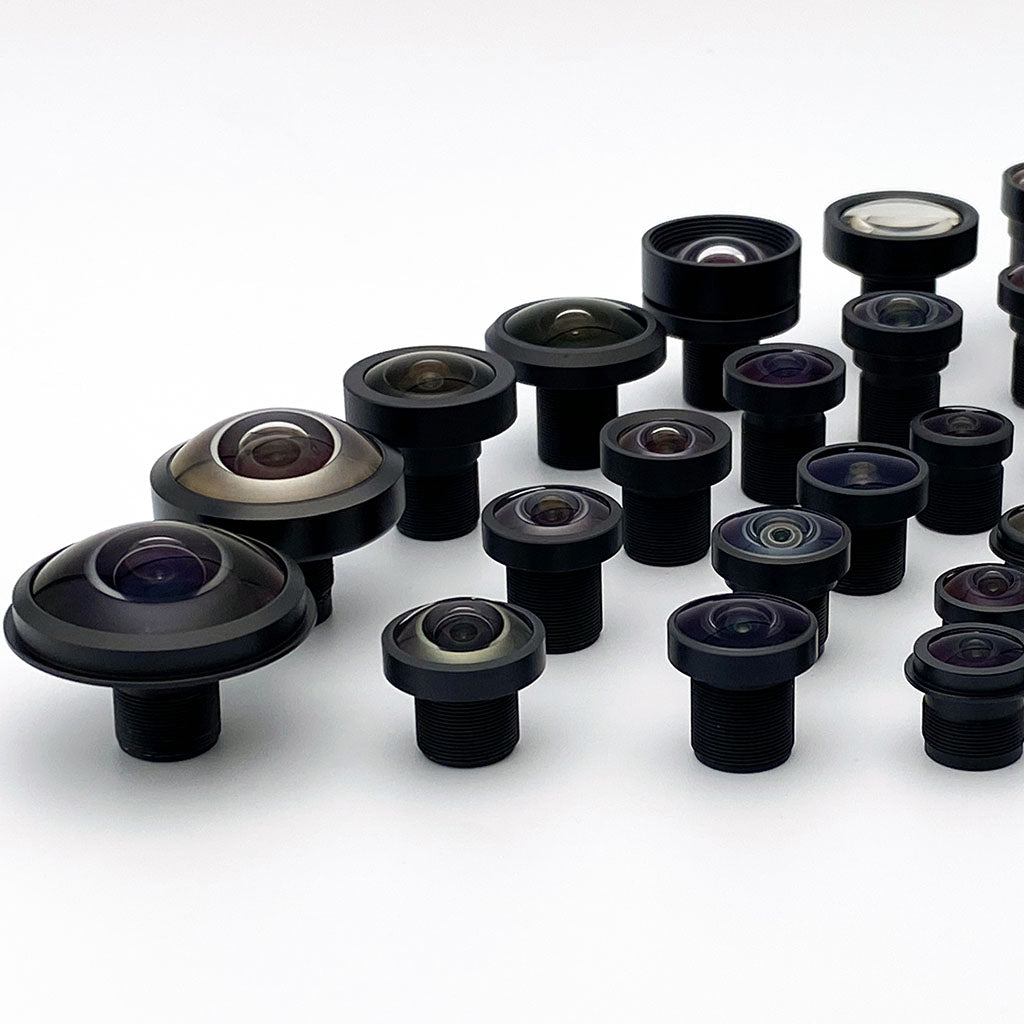
After calculating your required focal length, browse our M12 lens collection to find matching options. We stock 80+ M12 optical designs from 0.8mm fisheye to 100mm telephoto, and most ship same-day from US inventory when ordered before 12 PM PST.

AOV와 선형 시야각(FOV)의 차이점은 무엇인가요?

Angle of view is measured in degrees. For a lens focused at or near infinity, AOV is set by focal length and sensor size and does not change with subject distance. At close focus the effective AOV narrows slightly. Linear FOV describes actual scene coverage (meters or feet) at a specific working distance.

다음 공식을 사용하여 두 값을 서로 변환할 수 있습니다: 선형 시야각(FOV) = 2 × 거리 × tan(수평 시야각/2). 수평 시야각이 60°인 경우, 1미터 거리에서는 1.15미터 폭을, 10미터 거리에서는 11.5미터 폭을 커버합니다.

렌즈 왜곡은 시야각(FOV)에 어떤 영향을 미치나요?

The sensor-based focal-length calculation assumes rectilinear projection at a distant focus. Barrel distortion and fisheye projections change the mapping between sensor position and viewing angle. The object-size-to-angle calculation uses scene geometry and does not depend on that projection.

왜곡이 포함된 정확한 시야각(FOV) 사양이 필요한 응용 분야의 경우, 당사의 왜곡 고려형 시야각 계산기를 사용하거나 제조업체의 데이터시트를 참조하십시오.

머신 비전 응용 분야

검사 시스템: 검사 폭과 장착 높이를 정의하고, HFOV를 계산하며, 렌즈를 선택합니다. 당사의 C-마운트 렌즈는 글로벌 셔터 센서를 사용하는 산업용 검사 분야에 적합합니다.

Robotics navigation: Wide-angle coverage (120°+) provides situational awareness. Our fisheye M12 lenses reach up to 230° diagonal FOV for panoramic perception.

카메라 화각: 기술 관련 자주 묻는 질문

카메라 화각이란 무엇인가요?

시야각(AOV)은 카메라가 포착하는 장면의 각도 범위를 말하며, 도(°) 단위로 측정됩니다. 이는 참조하는 센서 차원에 따라 수평, 수직 또는 대각선 시야각으로 표현될 수 있습니다.

물체와의 거리로부터 AOV는 어떻게 계산하나요?

Use the formula: AOV = 2 × arctan(dimension ÷ (2 × distance)). For horizontal AOV use object width. For vertical use height. For diagonal, first calculate √(width² + height²).

센서 사양을 바탕으로 초점 거리를 어떻게 계산하나요?

먼저 센서 크기를 계산합니다: sensor_width = 픽셀 수 × 픽셀 피치 ÷ 1000 (µm에서 mm로 변환). 그런 다음: EFL = 센서 크기 ÷ (2 × tan(AOV ÷ 2)).

렌즈 왜곡이 이러한 계산에 영향을 미치나요?

Distortion affects the sensor-size-to-focal-length tool, which assumes rectilinear projection at a distant focus. The object-size-to-angle tool uses a centered, perpendicular scene plane and distance from the entrance pupil. It does not depend on the sensor projection.

M12 렌즈에는 어떤 초점 거리가 있나요?

Commonlands stocks M12 lenses from 0.8mm (up to 230° fisheye) to 100mm telephoto. Popular focal lengths include 2.8mm, 3.6mm, 6mm, 8mm, 12mm, and 16mm. Browse the full M12 lens collection.

문의하기

미국에 기반을 둔 당사의 엔지니어링 팀과 연락해 보세요