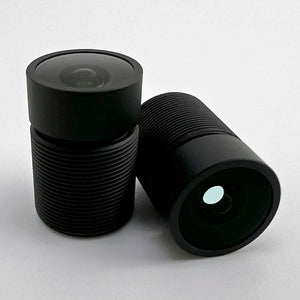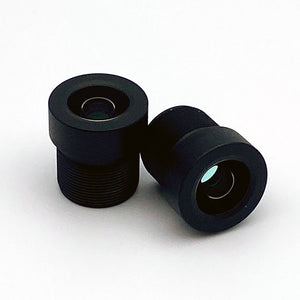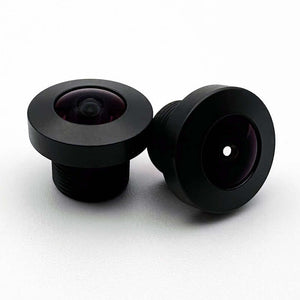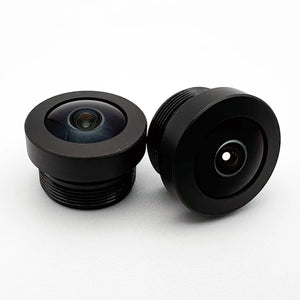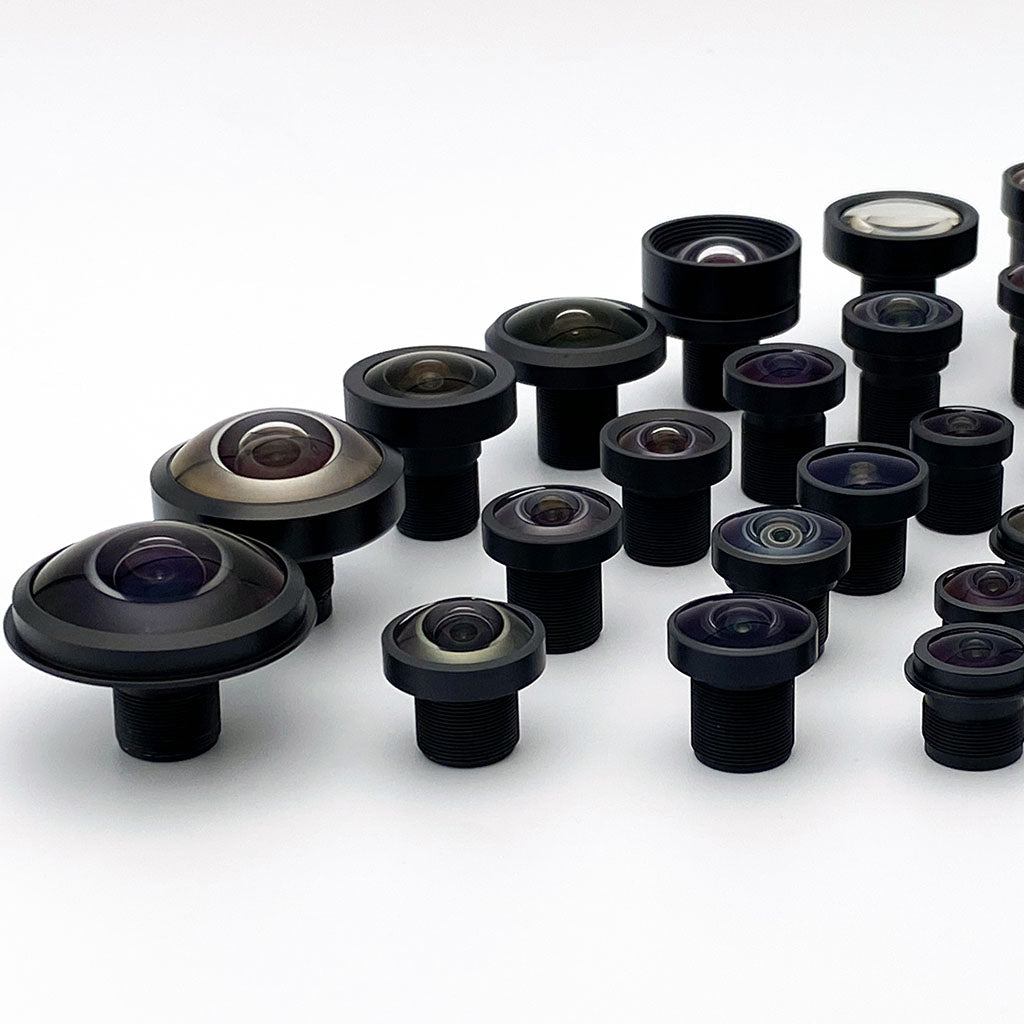

Harsh-Environment Machine Vision Optics

Ruggedized Machine Vision Lenses: Thermal Stability, Hydrophobic Coatings, and Vibration Resistance

What actually makes a machine vision lens ruggedized: thermal stability and athermalization, all-glass versus hybrid construction, hydrophobic front-element coatings, and vibration resistance for outdoor, automotive, and industrial deployments.

By the Commonlands engineering team · Updated July 2026 · 21 min read

A ruggedized all-metal M12 lens shedding water beads from its hydrophobic front coating

A ruggedized machine vision lens is not defined by an IP rating alone. It combines sealing against dust and water, a construction that holds focus as temperature swings, a front-element coating that sheds water and resists contamination, and validated performance after real vibration, shock, and thermal cycling. Ruggedization applies to select M12 lenses and select C-mount lenses built and tested for it, not to every lens in either mount family.

What makes a machine vision lens ruggedized?

Ruggedized describes a lens that survives environmental stress and keeps producing a usable image through it, not a lens that merely carries a sealing spec. Four properties determine whether a lens qualifies: ingress protection against dust and water, mechanical and thermal stability that holds the focal plane in place, front-element coatings that resist water and contamination, and validated performance confirmed after the lens has actually been through the relevant stress conditions.

Each property addresses a different failure mode, and none of them substitutes for the others. A sealed lens that drifts 30μm out of focus after a 40°C temperature swing has not been ruggedized for an outdoor deployment. A thermally stable lens with an unsealed barrel still admits water through the thread interface. Evaluating a candidate lens means checking all four properties against the actual deployment conditions, not scanning for a single headline spec.

PropertyWhat it protects againstWhat it does not solve
Ingress sealing (IP-rated)Dust and water entering the barrel through thread and joint interfacesThermal defocus, vibration-induced focus shift, front-surface water film
All-glass, aluminum-barrel constructionThermal defocus across temperature swings; long-term focus driftIngress (a glass lens in an unsealed barrel still admits moisture)
Hydrophobic front coatingWater film and rain-drop scatter on the front element; surface contamination buildupInternal moisture ingress, chemical corrosion, physical impact
Environmental validation testingConfirms resolution and focus position after real stress exposure; surfaces seal or adhesive failure modes before deploymentOngoing field maintenance and monitoring

Ingress protection is a large enough topic that it has its own reference: see IP ratings for machine vision lenses for how IP67 and IP69K are tested and which rating applies to which exposure. This page covers the other three properties in depth: thermal stability, athermalization, and hydrophobic coatings, plus vibration resistance and validation.

Ruggedization is a select-product property, not a mount-family property. Selecting from the M12 lenses collection or the C-mount lenses collection does not automatically get an engineer a ruggedized lens; most products in both catalogs are specified for stable indoor conditions and standard handling. A lens earns the ruggedized label only when its datasheet documents an IP rating, states its element and barrel materials explicitly, lists a hydrophobic coating on a named surface, and references environmental test data rather than a general durability claim. Treat any product description that uses the word "rugged" without those specifics as unverified until confirmed with the supplier.

An all-glass all-metal M12 lens threaded into a board-level camera for thermal stability
Metal barrels and tight threads hold focus as temperature shifts.

How does temperature affect machine vision lens focus?

Temperature change moves a lens's focal plane through three simultaneous first-order mechanisms: the barrel and internal spacers expand or contract by their coefficient of thermal expansion (CTE), the glass refractive index shifts with temperature (a property called dn/dT), and the glass elements themselves expand or contract, changing their radii and thickness and therefore their optical power. All three operate at once whenever ambient temperature changes, and together they are called thermal defocus. CTE mismatch between materials in the optical path adds a related but distinct effect: mechanical stress at the interface, covered separately below, which produces asymmetric aberration and bond fatigue rather than moving the focal plane to first order.

Barrel and spacer expansion

Every dimension in a lens changes with temperature in proportion to its material's CTE. The barrel lengthens or shortens; spacers between elements shift. Element spacing changes, which moves the rear focal point, while a fixed-focus sensor stays where it is. Aluminum barrel material runs roughly 23 ppm/°C; optical glass elements typically fall in the 7–9 ppm/°C range, so the barrel expands about three times faster than the glass it holds. That mismatch is the root cause of most thermal defocus in metal-barrel, all-glass lenses.

Refractive index change (dn/dT)

Glass refractive index is temperature-dependent. For most optical glasses, dn/dT is small and positive, a few parts per million per degree Celsius. For optical plastics such as polycarbonate, dn/dT is much larger in magnitude and opposite in sign. Opposing sign is not inherently a liability. Deliberately combining a positive-dn/dT glass element with a negative-dn/dT plastic element is a standard passive-athermalization technique, since the two contributions can be sized to cancel. What actually makes typical hybrid designs harder to characterize than all-glass is magnitude, not sign: plastic's dn/dT and CTE are large enough that in a cost-driven design not engineered for cancellation, the plastic element dominates the thermal budget and produces a bigger, less predictable net drift.

Element dimensional expansion

The glass elements themselves also expand and contract with temperature, though by a smaller amount than metal barrel materials since optical glass CTE typically runs 7–9 ppm/°C. Changing radii and center thickness changes each element's optical power, contributing to the net focus shift alongside the dn/dT-driven index change. This is a first-order effect in the same category as barrel expansion and dn/dT, captured in the thermo-optic coefficient (gamma) that lens designers use to model total thermal defocus.

CTE mismatch and mechanical stress

When barrel material and element material expand at different rates, the interface between them carries stress. This is a separate effect from the three first-order mechanisms above: it does not displace the focal plane directly. At moderate swings it can shift element centroids slightly, introducing low-level asymmetric aberrations. At extremes, or after enough thermal cycling, differential expansion can delaminate cemented or bonded surfaces, a failure that does not reverse when temperature returns to normal.

파라미터All-glass, all-metalHybrid (glass + plastic)All-plastic
Typical CTE range7–23 ppm/°C7–70 ppm/°C (mixed)60–80 ppm/°C
Focus shift magnitudeLower, more predictableHigher, less predictableHighest, least predictable
Typical operating rangeWider, often -40°C to +85°C classNarrowerNarrowest (treat specific boundary numbers as illustrative and confirm each design's rated range on its datasheet)
Thermal cycling durabilityHigher; matched glass-glass bonds age more uniformlyLower; bond fatigue risk at glass-plastic interfacesLowest for wide-swing outdoor use
Best fitOutdoor, industrial, automotive, agricultureIndoor factory, controlled-temperature roboticsConsumer, indoor, disposable

Always confirm the datasheet operating temperature range rather than assuming from construction type. Not every manufacturer publishes it the same way, and some IP-rated lenses list thermal shock performance separately from steady-state operating range. The magnitude of focus shift scales with the size of the temperature swing from the calibration point; the direction of shift is design-dependent, set by which materials and element positions a given lens uses, not a universal rule that applies the same way to every design.

Why this matters in practice

Compare expected thermal focus shift to your system's depth of focus at the operating aperture. A 1/2″ sensor at F/2 with 3μm pixels has a depth of focus on the order of 8–15μm. A shift large enough to exceed that range leaves a nominally sharp camera visibly soft without any physical damage to the lens. Use the Commonlands depth-of-field calculator to estimate your own margin before assuming a given construction is adequate.

Thermal cycling has a second consequence beyond defocus: it pumps moisture. As a lens cools, air inside contracts and, in an unsealed assembly, draws in ambient air; as it warms again, any moisture that entered deposits on internal glass surfaces as haze that no refocusing recovers. IP-rated sealed construction blocks this pathway. The sealing rating itself is earned by the seals and sealed interfaces (compressed O-rings and gaskets at every joint, not the element material), but products built to a sealing spec also tend to use all-glass elements and aluminum barrels for thermal stability, so sealed and thermally stable construction commonly co-occur on the same product without one causing the other.

Seal and adhesive materials have their own thermal service ranges that do not automatically match the glass and barrel specification. Silicone O-rings typically maintain elasticity from around -60°C to +200°C, while NBR O-rings are usually limited to roughly -40°C to +120°C, and cyanoacrylate staking adhesives can begin losing strength above roughly 80°C; standard anaerobic threadlockers, a different chemistry used at thread interfaces, are typically rated to around 150°C, with high-temperature grades rated higher still. If an application runs near either temperature extreme, verify seal and adhesive material ratings as a separate line item from the glass and barrel specs. A lens can have excellent thermal defocus performance and still fail from a seal that was never rated for the actual deployment temperature.

Specifying correctly for a wide temperature range starts with defining the actual range, not the ambient figure from a weather chart. Camera surface temperature is usually the relevant number, and it includes solar load on a dark housing (which can add 20–30°C above ambient in direct sun), self-heating from the sensor board and any onboard image processing, and cold-soak conditions at the installation latitude. Once the real range is known, request thermal focus shift data in microns per 10°C from the manufacturer and compare it against the system's depth of focus at the operating aperture, rather than relying on the datasheet's operating temperature range alone. An operating-temperature range often indicates the lens will function at those temperatures rather than guaranteeing it stays in focus throughout, but this varies by manufacturer; confirm whether a given range reflects optical performance or only survivability.

What is an athermal lens?

An athermal lens is an optical assembly designed so the focal-plane position stays close to its set point across a wide temperature range. Athermalization means thermal focus drift has been intentionally reduced, not eliminated, to a level that keeps the image within the system's acceptable sharpness window across the rated operating range. It is a design property, not a separate product category: a well-specified all-glass M12 lens for outdoor use is typically closer to athermal because its materials and layout were chosen to reduce thermal shift, while a budget hybrid lens usually is not, because its plastic elements produce large, poorly predictable drift. All-glass construction lowers thermal drift, but it does not by itself guarantee athermalization; that requires the CTE and dn/dT contributions to be deliberately balanced.

Passive athermalization versus active refocus

Passive athermalization uses material selection and element positioning so that mechanical and optical thermal effects partially cancel rather than compound: all-glass elements, barrel materials chosen for CTE compatibility with the optical design (stainless steel around 17 ppm/°C, titanium around 8.6 ppm/°C, or Invar around 1.2 ppm/°C for the most demanding cases), and spacer geometry chosen deliberately rather than by default. It requires no motor, no controller, and no power; the focus is fixed at installation and holds passively.

Active refocus is a different approach entirely: a motor or actuator moves elements in response to a temperature sensor or contrast-detection signal, correcting focus after the fact rather than minimizing the shift in the first place. Autofocus mechanisms solve a related but distinct problem (working-distance change), and applying one to solve a purely thermal problem adds cost, firmware complexity, and mechanical failure modes that most fixed-distance embedded vision systems do not need. For most compact M12 and C-mount cameras, passive athermalization reaches adequate stability at much lower cost.

Working definition

An athermal lens is one where thermal focus shift across the rated operating range stays within the system's depth of focus without any active intervention. The design target is not zero drift. It is drift small enough to be harmless for the application.

Athermalization matters most where large temperature swings are routine and refocusing after installation is impractical: outdoor cameras exposed to seasonal extremes, automotive and near-vehicle mounts that see engine-bay heat and cold starts, agricultural and remote-site sensors with no maintenance access, and any high-resolution sensor at small pixel pitch where depth of focus is already tight. Indoor factory systems under stable HVAC conditions often tolerate ordinary all-glass construction without needing explicit athermalized design, though the choice should be made deliberately rather than assumed.

Software is not a reliable substitute for athermalization after the fact. Once a lens has drifted out of focus, fine detail reaches the sensor at strongly reduced contrast; deconvolution can partially restore mildly attenuated detail at the cost of amplified noise, but it fails as the shift grows and fine detail drops below the noise floor. The dependable corrections are preventing the shift with an athermalized design, or correcting it mechanically through refocus before the image is captured.

Verifying thermal stability for a specific system

Datasheet claims of "athermalized" or "all-glass, all-metal" are a starting point, not a substitute for verification on the actual camera assembly. A practical test protocol mounts the candidate lens on the target camera, fixes a resolution target (an MTF chart or Siemens star works well) at the expected working distance, and thermally soaks the full assembly at the minimum expected operating temperature for at least 30 minutes before measuring. A lens reaches thermal equilibrium more slowly than a thermocouple does, so a measurement taken immediately after a chamber door opens is not representative. Repeat the capture at nominal and maximum temperature, evaluate sharpness at the image corners and edges as well as the center (thermal shift can introduce field tilt in addition to pure defocus), and set final focus at the midpoint of the expected range rather than at room temperature unless the deployment is known to sit at one extreme.

What is a hydrophobic lens coating?

A hydrophobic lens coating is a water-repellent surface treatment, typically a thin fluoropolymer or modified-silica layer, applied to the front outer surface of the first optical element. It lowers the surface energy of the glass so water beads and rolls off rather than spreading into a continuous film. A water film across the front element scatters and refracts incoming light, reducing contrast and producing soft or hazy output; beaded water covers less surface area and clears more easily.

The coating leaves the lens's first-order imaging properties unchanged: it does not alter focal length, distortion, chromatic aberration, or depth of field. Its only optical footprint is the slight change in front-surface reflectance that any thin surface layer introduces. The benefit is environmental, not optical. It is also not interchangeable with two other coatings it is sometimes confused with. A hydrophilic anti-fog coating works by the opposite mechanism, encouraging water to spread into an optically uniform film rather than bead, which is the better choice for enclosed condensation-prone environments rather than outdoor rain or splash. BBAR (broadband anti-reflective) coating is applied to air-glass interfaces throughout the lens, including the front surface, and reduces Fresnel reflection and flare; it addresses light throughput, not water behavior, and a lens can specify both features independently on the same front element.

Hedge this claim

Hydrophobic coating is a durability and image-quality hedge, not a guarantee. It reduces the fraction of the front surface that stays wet and shortens the time before water clears, but it does not make a lens immune to heavy rain, and it does not seal the barrel. Water can still reach internal optics through an unsealed thread interface regardless of front-surface treatment. Persistent heavy contamination such as mineral deposits or caked residue still requires physical cleaning.

In practice, hydrophobic coating shows up alongside IP sealing on the same product because both address a wet outdoor or wash-down environment, but they solve different problems at different locations: the coating manages the exterior of the front element, and IP sealing manages the barrel interior. Evaluating a datasheet claim means checking that the coating is specified on the front outer surface (not an internal element), confirming a separate IP rating exists if barrel ingress is a risk, and treating a stated contact angle above roughly 100° as a meaningfully stronger hydrophobic effect than an unspecified generic claim.

Where a hydrophobic coating earns its keep

The clearest case is a forward-facing outdoor camera in rain or spray (a vehicle-mounted camera, an agricultural monitoring system, an outdoor security or traffic camera), where direct water impact and aerodynamic misting would otherwise accumulate on the front element continuously. A wash-down environment is the second common case: food and beverage lines, pharmaceutical manufacturing, and automotive assembly all use scheduled wet cleaning cycles, and a camera positioned inside that environment needs the front element to shed residual water quickly after each cycle rather than carrying a film into the next production interval. A hydrophobic-coated front element also resists adhesion of oils and airborne particulates between cleaning events, which extends the interval before manual cleaning is needed in machining, food-processing, or agricultural-spray environments.

The coating is a poor fit, on its own, for enclosed condensation-prone environments where temperature cycling drives humid air to condense on internal or front surfaces regardless of surface treatment. A hydrophilic anti-fog coating or a sealed, desiccated optical path addresses that failure mode more directly. Choosing between the two treatments should follow from the actual water source: external rain and splash favor hydrophobic; internal condensation favors anti-fog or active humidity control. Applying the wrong treatment will not fix the failure mode it was not designed for.

Vibration, shock, and mechanical stability

Vibration and shock affect a machine vision lens through three failure modes: focus-lock adhesive loosening, internal elements shifting under sustained vibration load, and the barrel-to-camera thread interface working loose. Vehicle-mounted cameras, conveyor-mounted inspection systems, robotics, and any mount with continuous mechanical disturbance put a lens through this stress continuously, not as an occasional event.

Fixed-focus lens designs that lock focus with UV-cure adhesive are generally more vibration-resistant than designs that rely on barrel friction alone or that retain an adjustable focus ring. All-glass elements in a rigid aluminum barrel resist internal shifting better than assemblies with plastic internal components, which can creep under sustained thermal and mechanical load together. For high-vibration applications (vehicle mounts, robotic end effectors, mobile platforms), request vibration test data or a stated qualification protocol from the supplier rather than inferring resistance from the product description alone.

Shock events (a vehicle impact, a dropped payload, a process disturbance on a production line) test a different failure threshold than continuous vibration: whether bonded elements and seals survive a single high-energy transient rather than sustained low-amplitude cycling. Both stress types should be validated separately when the deployment includes both, since passing one does not confirm the other.

Mobile robotics platforms combine vibration with the other stresses covered on this page in ways that a static outdoor camera does not: motor and wheel vibration is continuous rather than seasonal, thermal cycling from motor and battery heat adds to ambient swings, and the lens may see repeated shock from uneven terrain or collisions. For robot-mounted and vehicle-mounted vision systems, request vibration and shock qualification data alongside thermal and IP data rather than treating vibration resistance as implied by a sealed, all-glass construction. Sealing and thermal stability do not, on their own, confirm that bonded elements hold position under sustained mechanical load.

When a sealed lens is enough, and when a housing still matters

A sealed lens protects the optical barrel; it does not protect the camera body, sensor board, cable connections, or anything downstream. Whether a sealed lens alone is sufficient depends entirely on the sealing status of every other component in the assembly.

A sealed lens without an external housing is appropriate when the camera module is independently rated to the same or higher IP level, when the lens-to-camera thread interface is sealed with an O-ring or adhesive at assembly, and when cable exits are sealed with proper glands or connector seals. An external housing is still needed when retrofitting existing camera hardware with no IP protection of its own, when the deployment environment exceeds what the lens IP rating covers, or when the application requires protection beyond ingress sealing: EMI shielding, resistance to a specific solvent, or a serviceable protective window in front of the optics.

A housing carries real costs: an added protective window introduces two extra air-glass surfaces (roughly 8% total transmission loss uncoated, versus about 1% with a BBAR coating), and enclosures typically add 200–500g and meaningful bulk, which matters for drones, robot arms, and any payload-constrained platform. For systems designed from the start around an environmental requirement, a sealed lens paired with a sealed camera module is generally the lower-cost, better-performing path. For the full treatment of IP rating levels and how they are tested, see IP ratings for machine vision lenses.

Commonlands ruggedized lens examples

All-glass construction, aluminum barrels, and IP-rated sealing on select M12 lenses for outdoor, automotive, and wash-down environments. These are representative products, not the full ruggedized range. Browse the M12 lenses collection to filter by IP rating and format.

Top 6 ruggedized machine vision lenses

Commonlands builds and tests a select group of M12 lenses for harsh environments; the six below each carry a verified IP rating from IP67 to IP69K. This is a subset of the catalog, not the whole range. Most Commonlands lenses are specified for stable indoor conditions and standard handling, so ruggedization is a per-SKU property confirmed on each product page, never a guarantee that attaches to the M12 or C-mount family as a whole. The automotive M12 collection is the fastest place to filter to the sealed, wide-temperature-range models.

RankLens마운트SealingThermal stability noteBest environment
1CIL948 (4.8mm)M12IP69KAll-glass, AL6061 aluminum barrel, hydrophobic front elementForward-facing outdoor cameras in rain and road spray
2CIL394 (3.45mm)M12IP69KAll-glass, aluminum barrelAutomotive and ADAS exterior wide-angle
3CIL336 (3.6mm)M12IP6K9KSealed, hydrophobic front coating; confirm thermal range on the datasheetHigh-pressure wash-down and spray-down lines
4CIL190 (19mm)M12IP69KSealed washdown barrel; confirm thermal range on the datasheetFood and pharma washdown inspection at longer standoff
5CIL034 (3.2mm)M12IP67All-glass, aluminum barrel, low distortionGeneral sealed outdoor and industrial imaging
6CIL079 (8mm)M12IP67Athermalized, all-glass, sealedAgricultural and vehicle-mounted mid-field imaging
How we picked

Every entry is a Commonlands M12 lens whose IP rating and construction are stated on its own product page, ranked by ingress protection level first and then by how many ruggedization properties (sealing, all-glass construction, hydrophobic coating) the datasheet actually documents. Where a product page does not state thermal construction, the table says so rather than inferring it, and no field-of-view or coverage figures were recomputed here. Confirm the deployment against reliability and environmental test data before committing to a mount design.

Two honest limits sit outside this table. When the camera body itself lacks ingress protection, or the deployment needs EMI shielding or a serviceable protective window, a fully sealed camera housing (for example an IP67 enclosure around a Basler or Lucid module) is the better answer than a sealed lens alone, and the same holds for many mobile robotics mounts that add continuous vibration. When the sensor format runs larger than these M12 lenses cover, a ruggedized C-mount from Kowa or Tamron is a standard alternative, since Commonlands seals only select focal lengths.

Harsh-environment validation checklist

Use this list to evaluate whether a candidate lens is correctly specified for a harsh-environment deployment. Each item maps to a real, distinct failure mode. Passing one does not confirm the others.

Ingress and sealing

  • Confirm the IP rating matches the actual exposure. See IP ratings for machine vision lenses for which level applies to rain and splash versus pressure washing or steam cleaning.
  • Verify the lens-to-camera thread interface is sealed with an O-ring or adhesive applied at assembly.
  • Confirm the camera body or module is independently sealed to the same or higher IP rating, or that an external housing is being used.

Thermal and mechanical stability

  • Confirm all-glass construction and check both element material and barrel material in the datasheet, not just a general "high-quality optics" claim.
  • Verify focus is locked with adhesive rather than relying on barrel friction alone.
  • Confirm the operating temperature range covers the ambient extremes of the deployment, including solar load on the housing.
  • Request thermal focus shift data (μm per 10°C) and compare it to your system's depth of focus before assuming a construction type is adequate.

Coatings and vibration

  • Specify a hydrophobic front-element coating for cameras exposed to rain, irrigation spray, or wash-down cycles.
  • Confirm any hydrophobic or BBAR coating claim states which surface it applies to.
  • Request vibration and shock test data for vehicle, robotic, or conveyor mounts rather than inferring resistance from the product description.

Validation before production

  • Run the complete assembly through ingress testing at the applicable IP level.
  • Thermal-cycle the lens across the full operating range and measure resolution and focal position before and after.
  • Vibrate the assembly at the mount's expected frequency and amplitude and measure focus retention.
  • Measure optical performance after each stress phase individually, not only after the complete sequence.

Validation exists to catch failure modes that a spec sheet alone cannot reveal, and it should test the complete assembly rather than the lens in isolation. A seal that measures correctly on a bench fixture can still fail once mounted in the actual housing, and a lens that shows acceptable resolution at room temperature can still fail once the full stack of ingress, thermal, and vibration stress is applied together in the sequence and combination the deployment will actually see. Treat each checklist item as testing a distinct failure mode rather than a proxy for the others. Passing the IP test does not confirm thermal stability, and passing a thermal cycle does not confirm vibration resistance.

Related reading

For dimensional detail on IP67 versus IP69K testing and when each applies, see IP ratings for machine vision lenses. For mount-level differences that affect ruggedized options, see the M12 vs C-mount vs CS-mount guide.

For working-distance and field-of-view planning around a ruggedized lens choice, see working distance in machine vision and the field-of-view calculator.

Water sitting up as tight beads on the hydrophobic coating of a lens front element
A hydrophobic coating sheds water so droplets never blur the view.

자주 묻는 질문

What makes a machine vision lens ruggedized?

A ruggedized machine vision lens combines ingress protection, thermally stable construction that holds focus across the operating temperature range, coatings that resist water and contamination on the front element, and validated performance after vibration, shock, and thermal cycling. An IP rating alone does not make a lens ruggedized; the lens must also preserve resolution and focus position after real environmental stress, not just claimed compliance with a spec sheet.

How does temperature affect machine vision lens focus?

Temperature change moves a lens's focal plane through three simultaneous first-order mechanisms: the barrel and spacers expand or contract by their coefficient of thermal expansion, the glass refractive index shifts with temperature (dn/dT), and the glass elements themselves change size, altering their radii, thickness, and optical power. CTE mismatch between materials adds a separate effect: mechanical stress that produces asymmetric aberration and bond fatigue rather than displacing the focal plane directly. The magnitude of the resulting focus shift scales with the size of the temperature swing; the direction of shift is design-dependent, driven by which materials and element positions are used, not a fixed rule.

What is an athermal lens?

An athermal lens is an optical assembly designed so thermal focus shift is reduced, not eliminated, keeping the image within an acceptable sharpness window across the rated temperature range. Passive athermalization uses material choice and element spacing so mechanical and optical thermal effects partially cancel rather than add. It requires no motor or power; active refocus, which does use a motor, is a separate approach for a different problem.

Are all-glass M12 lenses more thermally stable than hybrid glass-plastic designs?

Generally yes for typical designs. Polycarbonate has a dn/dT much larger in magnitude and opposite in sign to optical glass, and its CTE runs several times higher than glass. The opposing sign is not the problem by itself; opposing-sign contributions can partially cancel, which is exactly what deliberate athermalization exploits. In most cost-driven hybrid designs, though, the plastic elements' much larger dn/dT and CTE magnitude overwhelm any cancellation, producing a larger and less predictable net drift than an all-glass design, where every element expands at a similar, characterizable rate. A hybrid lens deliberately engineered to use plastic's negative dn/dT as a compensating element can outperform a naive all-glass design, but that is the exception, not the typical off-the-shelf case.

What is a hydrophobic lens coating?

A hydrophobic lens coating is a water-repellent surface treatment, typically a thin fluoropolymer or silica-based layer, applied to the front outer surface of a lens. It lowers surface energy so water beads and rolls off instead of spreading into a film that scatters light and reduces contrast. It sheds water and resists surface contamination between cleaning cycles; it is a durability hedge, not a guarantee against every contamination or ingress condition, and it does not replace barrel sealing.

Is a hydrophobic coating a substitute for an IP rating?

No. Hydrophobic coating treats the front outer surface only; it does not seal the barrel, thread interface, or focus-ring joints against water or dust ingress. An unsealed lens with a hydrophobic front element still admits moisture internally. IP sealing and hydrophobic coating are complementary features that commonly appear together on the same product but address different failure modes. See IP ratings for machine vision lenses for the sealing side of the picture.

How do shock and vibration affect ruggedized lens selection?

Vibration and shock can loosen focus-lock adhesive, shift internal elements bonded under sustained load, or work an M12 thread loose at the camera interface. All-glass lenses in rigid aluminum barrels with fixed, adhesive-locked focus are generally less susceptible to vibration-induced defocus than designs with adjustable focus rings or plastic internal components. For high-vibration mounts, request test data or a qualification protocol rather than relying on the product description alone.

When is a sealed lens enough, and when is an external housing still required?

A sealed lens protects the optical barrel only. If the camera body and circuit board are also sealed to a compatible IP rating, no external housing is needed for ingress protection alone. A housing is appropriate when retrofitting existing camera hardware that lacks IP protection, when the deployment environment exceeds what the lens IP rating covers, or when the application needs protection beyond ingress sealing, such as EMI shielding or a serviceable protective window.

How should engineers validate a harsh-environment lens design?

Run the complete lens-and-camera assembly through the actual stress profile it will see in service: water and dust ingress testing at the applicable IP level, thermal shock and thermal cycling across the full operating range, and vibration testing at the mount's real frequency and amplitude. Measure resolution, contrast, and focal position before and after each stress phase, not only at the end of the full sequence, since a lens can pass one test and still fail another.

Can software fix thermal focus shift after the fact?

Not reliably. Once a lens has drifted out of focus from a temperature change, fine detail reaches the sensor at strongly reduced contrast. Deconvolution can partially restore mildly attenuated detail at the cost of amplified noise, but it fails as the shift grows and fine detail drops below the noise floor. The dependable fixes are preventing the shift with an athermalized lens design, or correcting it mechanically through refocus before the image is captured.

Does a hydrophobic coating improve image quality on its own?

Not directly. Hydrophobic coating does not alter focal length, distortion, chromatic aberration, or depth of field. Its benefit is environmental: by keeping the front surface clearer of water and contamination, it prevents the image degradation that a wet or dirty front element would otherwise cause. A clean lens performs as its optical design specifies; the coating just helps keep it clean longer between maintenance cycles.

Do all M12 or C-mount lenses count as ruggedized?

No. Ruggedization (sealing, thermally stable construction, hydrophobic coatings, and vibration validation) applies to select lenses within both the M12 and C-mount families that were specifically built and tested for it. A standard indoor-rated lens in either mount family is not automatically suitable for outdoor or washdown use; check the specific product's IP rating, construction materials, and coating specs before assuming ruggedized capability.

  1. Technical articles
  2. Ruggedized lenses for harsh environments

Need help selecting a ruggedized lens for your deployment?

Send your sensor, mount, temperature range, and ingress requirements to Commonlands engineering. We will confirm whether a standard sealed lens meets your spec or whether additional validation is needed.